
![]()
Feb 2013 Update
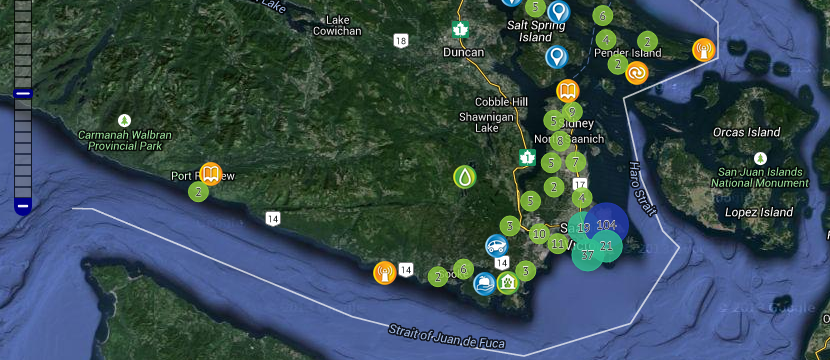
The Community Mapping Collaboratory (CMC) continues to grow and build community mapping and engagement initiatives within and between community and the UVic campus. We remain very inspired and in close touch with our core global partner Green Map whose work and systems reach many parts of the world. We are very grateful to our Steering Committee with university and community representation. Current plans are focused on the development of a Capital Regional District (CRD) on-line community green map to be launched this summer 2013. The CRD and the City of Victoria have given tremendous leadership and support, gathering local contributions and interest. We are also working towards a UVic web-based community green map with support from the healthy campus advisory committee, campus planning and sustainability, student services and the community-university civic engagement office. A number of classes and programs are incorporating community mapping into their curriculum and class projects.
We continue to receive many requests for presentations, planning and support by schools and diverse community groups.
With the help of the United Way and MITACS we have four graduate student interns working with the Community Tables: Engaging Neighbours project with the communities of Colwood and Brentwood Bay-Tsartlip Nation (part of the Wsanec-Saanich peoples).
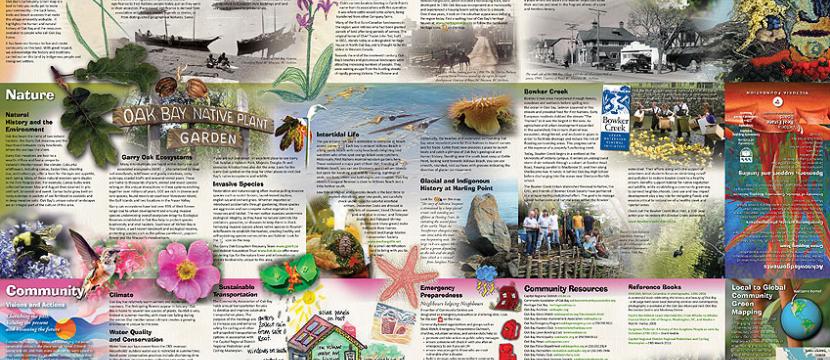
And finally the beautiful Oak Bay Community Green Map is getting widespread distribution after its Fall Launch in 2012.
In March we will announce the time and place for a regional Community Green Map network meeting. Everyone is welcome!
Lots of news, send us yours!
Ken Josephson and Maeve Lydon – CMC Coordinators
The partnerships and relationships created, and resources compiled over the last 12 years through the rich collaborative projects of Lifecycles' Common Ground Community Mapping Project spawned the ad hoc community mapping office and resource space in Geography at UVic that has evolved into the Community Mapping Initiative.
A number of community and university partners are interested in supporting and participating in the formalized CMI as well as a broader Common Ground Community Mapping Network.